
MEMBER LOGIN  l  FREE REGISTRATION
The Daily Bell Newswire

Editorial

Friday, October 05, 2012

Unlimited Democracy

By Tibor Machan
5

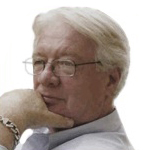
Dr. Tibor Machan

The Magna Carta was an early attempt to rein in government, reduce the scope of monarchical rule. Constitutional monarchy was the result in many countries.

When democracies replaced monarchies, the urgency to limit their scope of power waned even though there are many political theorists who warned that democracies can turn out to be quite tyrannical. The tyrannies of majorities are well known. Most recently there was plenty of talk about that in connection with developments in Egypt and elsewhere in the Middle East. The election of Hamas, for example, bode ill for limited democracy!

Even in countries such as the United States of America, the form of government that emerged was labeled "illiberal democracy." Fareed Zakaria's book The Future of Freedom: Illiberal Democracy at Home and Abroad discussed the difference between liberal and illiberal democracies in the context of geopolitics but the idea had been the focus of Alexis de Tocqueville's Democracy in America over a century ago.

Of course, there is something very wrong with unlimited democracies. There is simply no justification for the majority of the population in a country imposing its will on everyone. The idea is completely misguided. Why on Earth should a great number of people have the authority to force a small number to obey them? There is no argument anywhere in the history of political philosophy and theory that would make out the case for this. If it were a valid point, it would imply that a large number of thugs somehow have the right to subdue other people to serve them. The famous example of the lynch mob that hangs an accused person makes the point without difficulty. Expanding the will of vicious people doesn't make it virtuous. And even if what the larger group wants is actually virtuous, forcing it on others is still not justified since they would have to make the free choice to be virtuous. Human virtue must be a matter of free choice. Only in self-defense may force be applied to others!

The election process in so-called democratic countries is anything but justified or moral. Even when it hides behind the term "we" as it tries to do in too many instances – just listen to politicians anywhere around the globe and notice how often they pretend to be speaking for and acting in behalf of everyone – the will of the majority simply has no moral authority, none! Anyone who can dodge it successfully is perfectly justified to do so!




Tibor Machan:   View Bio  l  View Site Contributions
Libertarian / Libertarianism :   View Glossary Description  l  View Site Contributions
Latest Daily Bell Articles
SHARE YOUR THOUGHTS
You must be a site member to submit suggested edits or post feedback. In addition to submitting edit suggestions and posting feedback, your Free Membership to The Daily Bell gives you access to our Member Zone where you will discover a plethora of other member benefits.
Want to learn more? click here
 
NOT A MEMBER YET?
Join The Daily Bell and take full advantage of the benefits TODAY:
MEMBER LOGIN:
USERNAME:
PASSWORD:
REMEMBER ME
LOST YOUR PASSWORD / USERNAME?
Showing 1 - 5 of 5 - Newest on top - Reorder Feedback
  Posted by Merridth80 on 10/07/12 12:05 PM

It seems that today we have a majority of ONE, barry soetoro/bho, that has ordered that our votes for the election of our President shall be done outside our Country, by a company in Spain that George Soros just purchased!

Does anyone but me see the Conflict of Interest in this matter?

How can a sitting President of our Country be so hypocritical, Ruthless, and Unamerican?

Who will stop this madness? Our gov't won't!

Will Anyone?

  Posted by RR on 10/05/12 10:02 PM

Democracy is two wolves and a sheep voting what is for dinner.

  Posted by bionic mosquito on 10/05/12 08:48 PM

'The Magna Carta was an early attempt to rein in government, reduce the scope of monarchical rule.'

I don't believe this is an accurate statement. The Magna Carta codified the main characteristics of what had been the practice for centuries in the Middle Ages. I suspect it is beneficial that we believe the Magna Carta was a milestone, or significant change in direction, as it then minimizes the risk of looking further back - into the 'dark ages' - to find a healthier relationship between the king and the people. Perhaps that it was written is the most that can be said about this practice previously known to all by custom.

There had been a long-standing right of resistance to the monarch if he abused his position of subservience to the law - from the earliest times of the Middle Ages (immediate post western Rome). This right, Germanic and feudal in origin, was secured in a constitutional method in the Magna Carta; but the document only formalized what had been a well-known and well-respected concept: the king as well as the people were below the law, and if the king overstepped, the people had not just the right, but the responsibility to act. All (even the king) owed allegiance to the law (not the king), and all had duty to it.

'Law' was not defined as whatever the king said. Instead, law was defined as that which was 'old' (common and customary) and 'good' (equally applicable to all - king and people).

  Posted by navmagdale on 10/05/12 06:28 PM

What if we have elections every 4 years or sooner? ( I am talking for the case of my country Greece)...

Cartels and corrupted politicians decide and legislate.This was the first deliberate "Cannibalism" of the Republic that turned our democratic societies in disguised "parliamentary dictatorship".

The main crime against society started certainly by the "ascendant of the World Economy", who are seduced by the greed and managed to convince societies and corrupt governments that unlimited borrowings for subsistence costs and operating expenses of country is 'Acceptable'!

If world's leaders really care to create "Truly democratic societies" should consolidate the three famous "Common Principles of Democracy" about the disaggregation of the 3 Powers of Democracy (Legislative Power-Executive power and Judicial Power) which the ancient Greek philosophers Plato,Aristotle and the Roman Emperor Polybius offered to the world. The best, however, description of the concept and philosophy of separation of (3) Powers of the Republic remains the famous article "The Spirit of the Law"(French: De l'esprit des lois) by French philosopher Montesquieu, who is known to all the world's jurist!

  Posted by Danny B on 10/05/12 03:13 PM

Good article Tibor. Here is an accompaniment.
Click to view link


ABOUT US ARCHIVE THINKTANK   MEMBER ZONE
Editor's Message
Terms of Use
Privacy Policy
Contact
News & Analysis
Editorials
Exclusive Interviews
Videos
Special Reports
Polls
Biographies
Glossary
Links
Books
MEMBER LOGIN
© Copyright 2008 - 2013 All Rights Reserved.
The Daily Bell is published by High Alert Capital Partners Inc.