


Introduction: Rick Rule, founder of Global Resource Investments, began his career in the securities business in 1974 and has been principally involved in natural resource security investments ever since. He is a leading American retail broker specializing in mining, energy, water utilities, forest products and agriculture. Rule's company has built a national reputation for its specialist expertise in taking advantage of global opportunities in the oil and gas, mining, alternative energy, agriculture, forestry and water industries.
Daily Bell: Thanks for spending some time with us. Let's revisit and update some questions from previous interviews with you. Provide readers with a bit of background. You began as a broker. When did you go out on your own and why?
Rick Rule: I guess I really and truly went out on my own in 1991 when I formed my own brokerage firm, which was called Global Resource Investments. To avoid liable and slander charges, I won't talk about all the experiences that lead me to believe that I could only trust my clients to myself rather than to other firms. It suffices to say, I decided I could serve my clients better on my own than in any other prior arrangements I had with financial services providers.
Daily Bell: Are you happy with the way things have gone for Global Resource?
Rick Rule: Yes. I reached the point in growing Global where I was spending too much time running the business and not enough time managing money. My clients hired me to manage money. I had noticed that Eric Sprott had gone through the same transformation himself and built a team around him to manage the business management, while he went back to managing money. In selling Global and the related companies to the Sprott organization, I allowed myself to sort of append Eric's successes in creating an institution and an appropriate part of that institution for myself so I could go back to doing what I really like to do, which is securities analysis and money management.
Daily Bell: Tell us about the larger involvement of Sprott and how that is working out.
Rick Rule: Sprott has done a wonderful job for me. They have done a good job of relieving me of some of my former responsibilities. I have to say, I'm an intensely curious person and I have managed to fill the time with other endeavors pretty quickly. Sprott was 200-plus people strong on both sides of the border, and one of the most rewarding things ultimately for me will be that I have found some footing as a mentor for some young people. We have a tremendous head strength at Sprott and that has been a lot of fun.
The other thing that's been very interesting for me has been the evolution of the Sprott precious metals trusts. As you know, one of the things that your organization and our organization share is a fondness for precious metals, and a feeling that precious metals belong in every portfolio. The Sprott physical precious metals trust has proven to be a very viable product for a lot of people on a global basis. It's been a lot of fun for me to be involved in the evolution of that Sprott service.
I would say the third thing that has been fun for me has been what we call the building out of the Sprott technical services team – the geologists and engineers who help the portfolio managers at Sprott implement their big picture strategies, by understanding the minutiae of the geology and engineering associated with the companies that we participate in. That's been particularly rewarding for me.
Daily Bell: Junior mining stocks have been lacerated. What's going on?
Rick Rule: They are getting what they had coming to them. These junior miners acted like small governments for many years. They spent way more than they took in and they over-promised and under-delivered. If you merged every public junior mining company in the world into one company –Junior ExploreCo – that company would lose in a very good year $2 billion. And when I say lose I mean it would spend more on G&A and exploration than it generated by way of property sales, product sales or takeovers. In a bad year it would lose $8 billion. So if you look at the industry as a whole, an industry which year after year loses between $2 billion and $8 billion, you're stuck with how to value it. Do you value it at 5x losses, 10x losses? What's the correct price loss ratio? You get my point.
All of the performance in the secondaries is contained in the top 5 percent of the companies and the trick really is stock selection. If you buy the sector from your broker, he or she will live up to that name and you will get broker and broker and broker.
It is my belief right now that the market is beginning to bifurcate, which is an extremely important thing. The bottom 60, 70 or 80 percent of the companies on the TXSV are lurching inevitably toward intrinsic value, which is zero. The top of the exchange, however, is going to be driven by three things: reasonable valuations (notice I didn't say cheap because I don't think the market is cheap in the first instance), secondly M&A because of the insatiable need for high quality projects by intermediate and large producers, and third – and this is the most important and also the least well understood thing – discovery.
I think that after ten years of capitalizing the junior exploration sector extravagantly and enabling their better people who spend more and more money in stranger and stranger countries we are on the cusp of a real discovery cycle. You will note, as an example, that it was the funding cycle of the 1970s that lead to the Nevada gold discovery cycle of the 1980s. It takes ten years. Make no mistake, this market, as dismal as some people think this market has been, is still a market that rewards discoveries extravagantly. Witness Gold Quest, 6 cents to $1.16. What is Vor Minerals, .30 cents to $3.80. Africa Oil, .80 cents to $10. These are not dismal market moves.
Part of the reason that the market has been so dismal is because it deserves to be dismal, given the performance of the sector. But when you give this market an excuse to respond it responds in spades and I believe that we are on the cusp of a real discovery cycle as a consequence of having fed cash into the discovery industry for ten years.
Daily Bell: You recently appeared at a Casey Forum. What was the outcome of that? Are you as optimistic as ever?
Rick Rule: I think it depends on what you call optimistic. Robert Friedland has a wonderful phrase. If the situation is hopeless it doesn't need to be serious, meaning that the world is careening downwards, as a consequence of confidence and counterfeiting, and all of these things we talk about all the time. But it's sort of up to you to protect yourself and defend yourself. I've spent the last 15 years of my life trying to organize myself so that I'm as independent as I can be of events around me. Certainly with regards to the junior market, I think we've reached a point where we've cleansed a substantial part of the sin that existed in the sector by way of valuations since 2010. I think this is a very, very healthy set of circumstances.
I think that we are going to, for the first time since 1991 or 1992, see a lot of small companies disappear, which I think is extremely healthy. The system needs to cleanse itself of probably $2 billion in general administrative expenditures a year. The market is about to do that for us, which I think is wonderful. It won't feel wonderful to the people who bought shares without proper respect for their own lack of knowledge in 2009 and 2010. It's never fun to see something that you bought go to zero but I think it's useful for the sector as a whole. And I think it's useful for investors in the sector over time to understand that the Canadian regulators and the US regulators are not their protection. Their protection is themselves and, in fact, the biggest risk – and I have been saying this for years – is to the left of the right ear and to the right of the left ear. The fact that we are going through this market purge cycle, I think will be very, very, very good for investment performance on a going forward basis. So if you can construe what I just said as optimistic then yes, I'm extremely optimistic.
Daily Bell: How have ETFs changed the junior market and investing?
Rick Rule: They have added some liquidity to the sector, which I think is always interesting. An ETF in the junior mining sector is an absolute prescription for portfolio failure. If an ETF resembles my earlier answer of merging every small public company in the world, Junior ExploreCo, that business is a horrible business. So if you design an ETF around a business that is consistently consuming more capital than it generates, that ETF over time will of course go to its intrinsic value, which is zero. The fact that an ETF exists to contribute liquidity to a sector in which I profit is wonderful for me but I think it's a disaster for people who invest in it.
Daily Bell: Have futures had an impact?
Rick Rule: I think, again, the futures market is very liquid. I suspect particularly in the futures that there is a possibility of what is almost a religious experience, in the silver futures market. Eric Sprott points out there is about 150 million ounces of silver available for good delivery in certified warehouses today – 150 million ounces of physical silver – and yet the silver futures market trades 100 million ounces a day, which means from the market open this morning until about noon tomorrow the trades on the futures exchange will be covered.
This is astonishingly little physical coverage for the volume of metals that trades in the futures markets on a daily basis. It is sort of reminiscent of the equity that the major banks have relative to their bank sheets. If you think about a bank with a billion dollars in equity that has a $60 billion balance sheet, that's sort of reminiscent of a 100 million ounce-a-day futures market that operates on 150 million ounces of total inventory. It's sort of an analogue, if you will, for the idiocy that exists in the financial services sector. What strikes me in the context of your question about the futures market is this: The market could do all by itself, by accident, easily, what the Hunts tried to do 30 years ago simply because the amount of physical that's available for delivery, relative to the amount that trades by proxy in the futures market every day is so extreme.
Daily Bell: What's your criterion these days?
Rick Rule: It's never changed. Value. Good people. Working on deposits that would be financially accretive to acquirers. I am not now, and I have never been, attracted to the large low-grade deposits that have high front-end capital costs, that exhibit leverage to gold. I've always been more interested in deposits that have exhibited that old-fashioned deposit attribute, which would make money for their owners. In particular, we're interested in companies where the indicated net asset value of the deposit at reasonable prices and reasonable discount rates is greater than the sum of the enterprise value of the owner and the up-front capital cost. We like projects with indicated internal rates of return certainly higher than 25%, preferably higher than 30%. And we like payback periods of three years or less.
We are attracted to the gold and silver business because we think the likely outcome of (you have to call it what it is) 'counterfeiting' by central banks is higher nominal precious metals prices. We are also attracted to the uranium market because we think the uranium market is unduly depressed. I think we're still attracted to some of the agricultural minerals, potash and phosphate markets, as well as the water market and looking longer term, certainly the natural gas market. There's a lot of stuff to like out there right now.
Daily Bell: How about strategy, given that investors' money is dispersed among ETFs, futures, etc.?
Rick Rule: I have no trouble trading against ETF investors. I hate to say it but those people in the financial ecosystem, are my natural and rightful prey. You buy an ETF in a sector like junior mining, where the expectation on a broad base is failure, and success is confined to a small number of players who understand the market for what it is. I feel sorry for people who buy ETFs but I'm absolutely delighted that they do.
Daily Bell: Has gold peaked, price-wise?
Rick Rule: I don't believe so. It wouldn't be hard for me to believe that the market needs to digest the gains of the last two or three weeks but if you think about gold for what it has been for many years, which is simultaneously a medium of exchange and a store of value, that makes it almost ideally suited to operate as a shadow currency, particularly when the center is doing it's absolute best to debase every other medium of exchange.
The set of circumstances that we've seen around the central banks and the response to the currency crisis that we are in right now – if you had told me that this was going to occur 15 years ago I would have alleged, Anthony, that you are a fiction writer. What we've seen is absolutely incredible. The political class, and I guess in large measure the voters, have decided it's okay to substitute liquidity for solvency, and they're very different problems. The problems that we have in the West are largely a function of the fact that we've lived beyond our means for two or three decades and we need a reckoning. We need a purge – not that anybody wants it.
The idea that we deal with having too much debt by adding in more debt … the point is when you have such a deep hole you are supposed to stop digging. So I think the consequence of that – and I'm not saying next week or week after or two or three years from now – this volume of counterfeiting has to express itself in pricing, unless we have a massive default cycle. Those are the only two choices. If counterfeiting is such a good idea why don't they license you and me to do it?
Daily Bell: Will juniors break out? When?
Rick Rule: I think the juniors have broken out a little bit. At least they've flattened as opposed to declined. Again, if you are describing the juniors as the length and the breadth of the juniors it's impossible for them to break out. First of all, as a class they're valueless. Secondly, they have since 2010 largely postponed accessing capital that they largely need. John Kaiser pointed out about 12 weeks ago that over 50 percent of the TSXV share three common characteristics: They're selling below a quarter; they are selling substantially below their 52-week high so some of the managements are reticent about issuing capital, although they know they're worth nothing; and lastly, they have less than six months worth of working capital left.
It's my position that a widespread return to favor for the sector would be met by so much equity issuance that there is no demand for paper that couldn't be met by supply. I've had a long-term joke about the Canadian junior market, which is that the supply of shares in Canada can only be limited by the amount of standing inventory of timber that exists between Vancouver Island and Newfoundland. The Canadian dealer network can create paper faster than any amount of demand can be conjured up on a global basis largely because so much capital that is raised for the sector is wasted.
Daily Bell: Let's look at physical gold and silver. Do money metals matter?
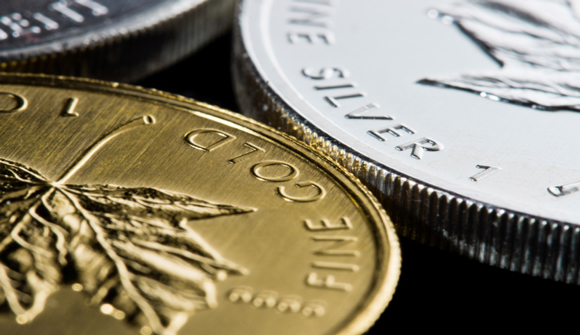
Rick Rule: Absolutely. They are one of the few rational forms of self defense left to people, given the debasement and the means and savings that most people have. Central banks are among other things engaged in a true war on savers, on people who did the right thing, who worked for 40 years – a real war on savers who were prudent and built up cash reserves to live on in their declining years. We have a situation now where they're getting 25 basis points on money that they worked for 40 years to accumulate. In a world where the cash that they have in their account is depreciating by 5% or 6% a year, the idea as a consequence of an active policy that the government is forcing people to take 25 basis points and depreciating the currency by 500 basis points is an absolute sin. It's a travesty. People like that have absolutely no choice but to protect some of their wealth with physical precious metals or physical precious metal proxies, like the Sprott physical trusts. I think it's absolutely imperative.
Daily Bell: Are these metals manipulated by a larger monetary elite?
Rick Rule: You and I will always disagree with that. I don't think there is any active conspiracy because I don't think the conspirators are that competent. I realize that does not make me popular with your readers but having hung around Vancouver for almost 40 years now I have seen numerous conspiracies but I haven't seen a conspiracy over time that has ever succeeded. I would suggest to you that the forces, for example, who run the United States who can't prevail in a war against a stone-age culture, who can't deliver kids, who can't deliver the mail, are incapable of delivering a long-term conspiracy to depress a major market.
Now, that point of view, among other things, puts me in a different corner even in parts of my own organization who have more skills with technical analysis than I and point out that you can't explain a lot of the data with regards to gold and silver markets without accepting the existence of a conspiracy to manipulate those markets. My own belief is somewhat different, not because I understand the technical data particularly well but simply because I don't believe the alleged conspirators are competent enough to pull off a conspiracy the size that they are alleged to be managing.
Daily Bell: You do some public speaking. What do you emphasize most in your talks these days?
Rick Rule: Prudence. I believe that despite all the risks that are out there in the world, the greatest risk that any individual investor experiences are the risks that are to the right of his or her left ear and to the left of his or her right ear. Simple common sense is the best way for an investor to get ahead. The investment maxims that were described 60 years ago in Ben Graham's The Intelligent Investor are everything that most investors need to succeed. The ability to differentiate right now, in both public and private markets, between math and magic is absolutely essential. The idea, as an example, that the United States currency can maintain itself when the on-balance sheet of our liability of just the central part of our collective is at $60 trillion and the net present value of unfunded liabilities, depending on whom you talk to, is somewhere between 80 trillion and 150 trillion – the idea that you can maintain that level of debt on 500 billion dollars a year in surplus private savings is stupid.
You either believe in math or magic. It's impossible mathematically to add a column of negative numbers and come out with a positive. Similarly, some sort of religious belief in the junior stock market when you have 4,000 public companies worldwide, the majority of which are run by a coalition of butchers, bakers and candlestick makers – the idea that you are going to get wealthy investing in a class like the juniors, who have a proven track record of failure, is pretty simple. Once again, you are confining yourself to magic rather than math. If you are going to make money in the juniors – and a lot of money can be made in the juniors – you can't invest in them as a class. You have to invest in proven moneymakers. And similarly, if you are going to store your wealth in a currency over time, the idea that you would store your wealth over time in currencies where the obligations were so much greater than the ability to service the obligation once again suggests that somebody believes in magic as opposed to math. I would suggest for most investors that they default to something that is unpleasant – a combination of hard work and prudence.
Daily Bell: What countries are most hospitable to mining today?
Rick Rule: Oh, boy. That's a short list. I am tempted to say the list reads Chile, Chile and Chile. I could perhaps broaden the list to include Brazil. Certainly Nevada, in the US, is a mining-friendly state but politically on a global basis there is a sense that since the resource industry is finally generating some spare cash the collective should steal it. That tendency seems to be resisted only in Chile, on a global basis.
The political outlook for resources in general is really quite dim. The mining industry has done a wonderful job of defrauding investors by understating the total costs of production. As an example, not reporting as part of their cost structure the capital that they wrote off in the '90s, which then doesn't get counted against acquisition cost per ounce produced now. As a consequence of the serious underreporting, the industry appears to be much more profitable than it is. Looking at the numbers generated by the industry, some host countries, particularly some of the most sophisticated host countries like in Africa, are temped to take a bigger piece of the pie than exists, and that's a very difficult set of circumstances.
Daily Bell: What are some of the most important silver mining companies, large and small?
Rick Rule: Probably as a consequence of the Canadian securities regulations and my transactional background I probably better differ from talking about companies in particular. The regulators in the United States and Canada would prefer that the information I give you be general and useless as opposed to specific and useful.
Daily Bell: What do you think of the current economic crisis? Has its depth surprised you?
Rick Rule: Its lack of depth has surprised me. I'm astonished that we haven't seen much more serious ramifications from it. The only explanation I have for it is two-fold: an old famous Ambrose Bierce quote that the root of confidence is 'con' and the desperate need that many people have to be conned. I thought it would have been deeper and more severe. I must say I am delighted but I am amazed!
Daily Bell: Revisit the genesis of the financial crisis. How can it be solved?
Rick Rule: I think we need a cleansing. I think we need a reckoning. Bill Bonner famously said when discussing the Greek crisis a couple of years ago that Greece was a society that over-consumed and under-produced and that somebody or some mechanism needed to be evolved that decided who got stiffed. He said there are three classes of stiffee's or stiffers: those who were savers, the potholders as an example, the beneficiaries of the government employees and the entitlement recipients, and the taxpayers. In terms of who was going to get it, he answered, correctly, "Yes" – meaning everybody is going to get it. When you have market imperfections that are solved not by a market correction but rather politically, you have an extremely inefficient method of solving market problems.
Markets, in fact , work; they're just messy. But when you try and deal with imperfections in the market you get back to a couple of other Ambrose Bierce quotes. One is that the process of politics can be understood by examining the roots of the word: 'poli' from the Latin for many and two, 'tic', English Colonial, for small blood-sucking insect. Hence the process of politics is many small, competing, blood-sucking insects. The second quote, which is a wonderful quote, is Ambrose Bierce's description of elections, which he describes as advance auctions of stolen property.
The political process seems to me to be a form of fascism, where the legislature tries to steal from other constituencies to support their own consistency, and seeks to protect their own individual constituents from theft in the process. Trying to deal with a situation where society has lived beyond its means for 20 or 30 years is the sort of thing that requires an economic solution and not a political solution. Nobody wants an economic solution because nobody wants a fair and just outcome. Everybody wants an outcome that preserves his or her standard of living, obviously at the expense of others.
Daily Bell: What's going on in Europe? Is the euro viable as it is?
Rick Rule: I don't think it's viable. I don't think over time the US dollar is viable, either. It's a question of timing. Bernanke said what the banks wanted him to say, which is he would use every means at his disposal – which is a different way of saying they're going to mortgage the future of the German children, to salvage the fortunes of the political class in Europe and the bankers.
What you see in Europe is the back-door nationalization of the banks. Private savers have taken their money out of the banks and the liability side of the banks' balance sheets in Europe have seen the substitution of official sector guarantees through private savings. On the asset side of the European banks' balance sheets what has happened is that European banks that own sovereign debt, that own debt issued by the sovereigns that regulate them, are allowed to carry that debt on their balance sheet at par rather than at market. It's called market to myth, rather than market to magic.
This goes back to an earlier part of our interview where I said you either believe in math or magic. You have a situation where the run on the banks have seen a substitution of official sector credit for private sector deposits, and the credits or the liquidity that have gone into the banks have allowed the banks to buy bonds issued by sovereigns that otherwise could not be sold to rational buyers. It's a spectacular, amusing, terrifying and completely legal Ponzi scheme. How long it will last? I don't know. It's difficult for me to understand how you print, as opposed to create, prosperity.
Daily Bell: What would be the impact of a fragmenting euro or EU?
Rick Rule: (Laughing) I would like to watch it from somewhere else on broad screen TV! Having a whole bunch of people who rely on transfer systems based on theft for their day-to-day existence, I suspect the reaction to the sensation of that will be pretty chaotic. I have to tell you, which I know you know but your readers might not, I am not an economist or a political scientist; I'm a credit analyst. I answer these questions because I am asked rather than because I have any faith in my answer. It seems to me, even in my life, even when I've had a problem, or even a big problem, I was better off facing it as soon as I possibly could because problems seem to compound.
I think the problem of a generation of Europeans and, for that matter a generation of Americans living beyond their means, is a problem that won't get better with time; it will get worse with time. Certainly, the set of circumstances that we would experience if we would begin to unwind our problems would be extraordinarily unsettling. It would be a time for social friction, perhaps like the '60s and '70s in the United States. In truth, I don't know the answer but I certainly know, as an example, that a generation of Americans looking to expect Social Security and didn't get it would be resentful. A generation that have come to expect that they can attend college on other people's dimes for four years or six years and take courses that they find interesting but have no utility, then expect that useless training to generate an economic return for them after they graduate — when they are disabused of that knowledge I think they are going to be resentful. I think there is a whole group of people, like everyone who has come to believe that they have the right to expect the state to intervene in the medical expenses that they incur over their life – even if their own actions through obesity, narcotics, alcoholism and tobacco consumption contribute to the problem that they create they expect that problem to be socialized. If there isn't sufficient funds to take care of that problem those people, too, will be aggrieved. I don't see a class that isn't going to be aggrieved going forward. I think that the conflict between various classes of society, where they have been trained to resolve their conflicts politically rather than earning their way out of their difficulties, will lead to incredible political and social fragmentation.
Daily Bell: What about the Fed's QE3? Is it going to bring the US housing market back to life?
Rick Rule: I think it will in the short term. I think liquidity in the short term will make people feel better about a lot of things. The other thing that's going to help the US housing market is the fact that the prices are 40 or 45 percent lower. The market is also going to help housing. Housing has some tremendous headwinds. The ugliest headwind is the fact that the baby boomers have passed the housing sector so that great big huge demographic or the bulge that favored housing has passed.
But housing has some things going for it in certain markets. There are people I know who are buying housing at $40 a square foot that's in reasonably good shape. They are buying houses as much as 35 or 40 percent of total replacement cost. The market clearing price for completed housing in a lot of markets means if you work backwards from the cost of constructing the house and the costs of getting the clearances and permits from the municipalities and states, it gives some finished lots in some areas a negative value, which is very interesting. I think that will endure to the benefit of housing in some markets and certainly these laughably low interest rates will stimulate housing. I realize that the official quote with regards to the inflation rate is fairly low and we can talk about the inflation rate later – but if you think about the availability in the United States of 30-year fixed mortgages in the 4% range, my suspicion is a decade from now that's going to look like an absolute gift. I think it should stimulate demand for single-family residential, particularly markets where they're priced below construction cost, where they give you the house at 50 percent off and then they give you the money at 60 or 70 percent off. That's a relatively attractive combination over time.
Daily Bell: Where do we go from here? Inflation – an inflationary depression? Or are there finally green shoots, as some have observed?
Rick Rule: I don't see very many green shoots. I think we need to resolve the dislocation between the way we live and the way we deserve to live. I think that will be resolved either through inflation or a lack of confidence and a severe deflation. We need to do something in every political economy in the West to reduce the debt. We are extremely liquid, we are insolvent and we need to do something to liquidate the debt and we need to do something to liquidate the call that consumers have on producers. The procedure for liquidating the debt and changing the relationship between producers and consumers, from my point of view, will generate a tremendous amount of social friction at some point in time in the future.
Daily Bell: What are the best investments to make throughout the business cycle and how do they change over time?
Rick Rule: Having talked about the fact you get no return on cash and that cash depreciates, sadly you have to have cash anyway because the chances that we could experience a psychotic break a la 2008 I think are reasonably high, although we have a lot of liquidity in the sector and that might forestall it for a while.
Unfortunately, as a consequence and the need to take advantage of an opportunity, one needs a lot of liquidity. I consider physical gold and silver and certificated gold and silver – certain certificated gold and silver like the Sprott Physical Trusts – to be good cash, albeit more volatile than American and Canadian dollars. I think the equity in companies that have definable and defendable competitive advantages have some pricing power will do well. I think we are halfway through a resource super cycle. I think we're in a cyclical decline in a secular bull market and I suspect that we will have another good ten years in a resource market, albeit with severe challenges if you don't understand your way around it.
I think the greatest thing, particularly for your young readers, is to invest in themselves. Invest in useful education and in a useful skill. Invest in knowledge. Do things like read and deploy the lessons of The Intelligent Investor. The value of knowledge and the value of skills are widely unappreciated and under-reported. It's understandable because people don't want to work hard or have to think but the ability in the product of working hard and thinking is invaluable. And it's very difficult for a fraudster or a government to steal directly your knowledge or experience. They can steal the product of it over time but I think it's widely underappreciated.
Daily Bell: What are the most important – seminal – articles of yours that you would encourage everyone to read? What are some new ones you want to point to? Where can they be found?
Rick Rule: Almost everybody should read The Intelligent Investor by Ben Graham, in the context of investing. It's critical. If you haven't also read Economics in One Lesson by Henry Hazlitt it is a must-read. Those are both good homework assignments for everyone. Read those – people will be successful.
I also wondered if you have heard of this little organization called Students for Liberty? They have just come out of right field, in our case. They are spectacular. They have grown from one chapter in Georgetown, five or six kids, to 870 chapters with 40,000 kids in six years on $1.3 or $1.4 million. It's very encouraging.
Daily Bell: On behalf of all of our readers we thank you for sharing your views with us.
Rick Rule: Thank you as well. Call me any time.

What we take away prominently when we come to gold and silver stocks is that Rick is fairly skeptical. Regarding gold juniors, his perspective seems to be that they've brought investor skepticism on themselves by under-performing and under-delivering. His idea is that the bottom 70 percent or so regularly deliver a loss that is aggregately in the billions.
Rick believes the political outlook for resources is "dim" because the mining industry has defrauded investors by mis-stating total production costs. By using write-offs creatively, the industry as a whole is able to understate how much it really costs to produce gold and silver in the 21st century.
Regarding hospitable mining countries, he basically starts and ends with Chile. "I could perhaps broaden the list to include Brazil," he adds, and perhaps Nevada, too.
His idea is that most of the rest of the world, governments certainly, are looking on successful mineral deposits as a license to steal. This is partially because the world itself is struggling in the grip of sluggish performance.
It is also because the mining firms, having understated costs, have made themselves a tempting target. The business in some cases looks better than it is.
Metals futures and ETFs have cut into the juniors market when it comes to raising capital. And government yield arbitrage is sucking money from institutional investors. We are not seeing a steady rise in the value of metals stocks as we did in the 1970s – despite the similarities of economic times.
Not yet anyway. Certainly, gold and silver stocks may appreciate significantly at some point but Rick Rule's idea is that it will be later rather than sooner. And the actual "value" and structure of metals stocks may play a bigger role going forward than they have in the past.