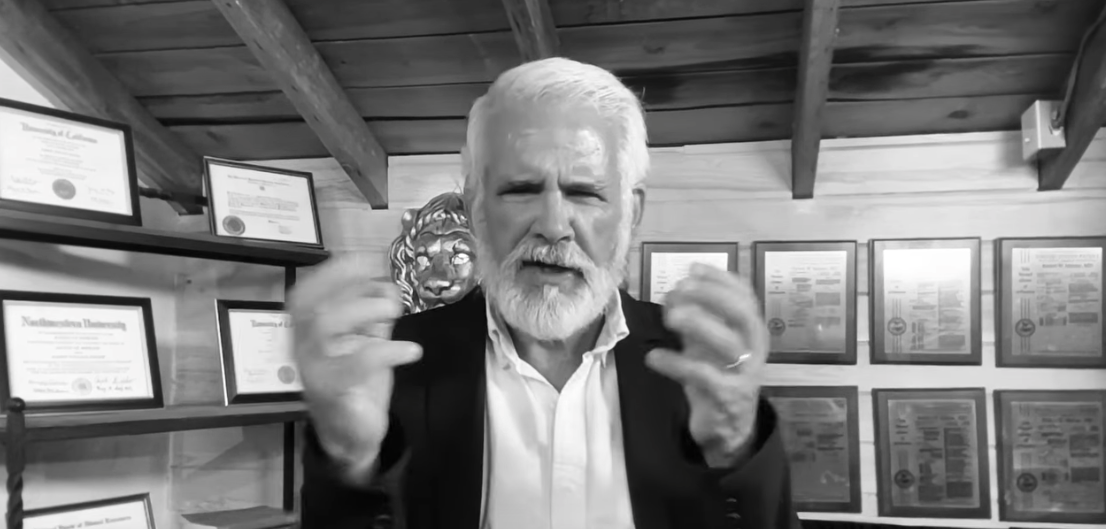
Dr. Robert Malone argues that modern Western institutions—from agriculture and healthcare to media, government, warfare, and finance—have become centralized, manipulative, and untrustworthy, making personal sovereignty and self-reliance increasingly important. Using his and his wife Dr. Jill Malone’s book Homesteading for Health as the practical alternative, he advocates producing more of one’s own food, strengthening local communities, questioning institutional authority, and reducing dependence on systems he believes manipulate information, medicine, money, and public behavior. Financially, Malone says fiat currency and centralized monetary policy allow inflation to function as a hidden tax on ordinary people, describes the international financial superstructure as unsustainable, and concludes that people should live more simply, autonomously, and locally rather than allowing themselves to be “victimized” by centralized institutions.
Top 5 Key Topics
Homesteading as personal sovereignty: Malone says he and Jill rebuilt their lives after being financially devastated during the Great Recession, eventually developing a Virginia property where they work 50 acres and own 39 after starting in an office trailer roughly nine years earlier. He argues people can begin with chickens, raised beds, a window box, or laundry-room hydroponics and progressively gain greater control over their food and lives.
Industrial agriculture destroyed small-farm America: Malone traces “get big or get out” agricultural policy to Agriculture Secretary Earl Butz and the Nixon administration, arguing it benefited agribusiness, Wall Street, and major equipment manufacturers while hollowing out small towns and family farming. He invokes World War II Victory Gardens as evidence that decentralized household food production can operate at enormous scale.
Institutional medicine and expertise have lost trust: Malone argues COVID exposed conflicts of interest and failures within what he calls the medical-industrial complex, while chronic conditions including Lyme disease and long COVID illustrate medicine’s tendency to label poorly understood symptoms psychosomatic. His broader principle is that genuine science requires questioning authority rather than accepting pronouncements from credentialed experts as “revealed truth.”
Media has become an information battlefield: Malone claims governments, intelligence organizations, corporations, social platforms, bots, and AI-driven profiling increasingly manipulate what people think, feel, and believe, describing the surrounding “information cloud” as continuously influenced for commercial or political purposes. He argues this manipulation damages interpersonal trust and community formation while making people more susceptible to further psychological influence.
Fiat money concentrates power and quietly taxes citizens: Malone argues Federal Reserve-driven inflation finances the welfare and military states while ordinary people bear the cost through declining purchasing power, and says the international financial system profits from fiat-currency manipulation in a way that is “clearly not sustainable.” While viewing gold as tangible intrinsic value and Bitcoin as an attempted escape from fiat money, he worries digital currencies can themselves be appropriated into centralized systems such as CBDCs and ultimately urges people to defend their economic and personal sovereignty.