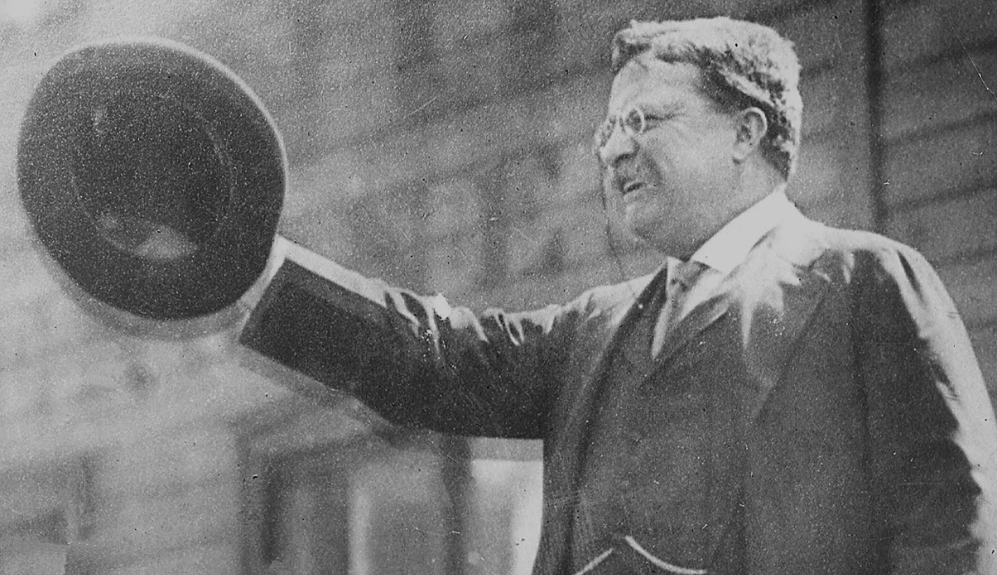
Christian from Thinking West argues that today’s victim culture, which treats grievance-claimers like “fine porcelain” and rewards influencers who build identities on injury, is psychologically destructive because it breeds defensiveness and inaction and defeats people before reality does. He uses Teddy Roosevelt as the counter-model: a sickly, asthmatic boy whose father refused to let weakness become his identity, who boxed his way past bullies, and who survived the death of his mother and wife on the same day in 1884 to become president and deliver a speech moments after being shot. His conclusion is that life isn’t fair but your response is your choice, and only a civilization that rewards overcoming hardship, rather than affirming victimhood, can grow stronger.
Top 5 Key Topics
The bull moose speech: While campaigning, Roosevelt was shot, with the bullet passing through his steel eyeglass case and folded speech before lodging in his chest. He told the crowd it “takes more than that to kill a bull moose” and carried the bullet for the rest of his life.
Childhood weakness turned into a challenge: Born sickly and asthmatic into a wealthy New York family, Roosevelt was told by his father that his mind was strong but his body weak, and the family built him a home gym to fix it. After two boys bullied him on a teenage trip to Maine, he took boxing lessons from former prize fighter John Long and carried the sport to Harvard in 1876.
Valentine’s Day 1884: Two days after his daughter Alice Lee was born, Roosevelt’s mother died of typhoid in the morning and his wife died of kidney disease in the afternoon, when he was 25. He marked the diary entry with a large X, rarely spoke of his wife again, and went ranching in the Dakota Badlands, which the speaker frames as Aristotle’s “great-souled man” bearing misfortune with dignity.
The Strenuous Life and the Man in the Arena: His 1899 “Strenuous Life” speech rejected ignoble ease in favour of attempting great things despite failure, and his 1910 Sorbonne speech “Citizenship in a Republic” attacked critics with no skin in the game, likely aimed at the media and do-nothing politicians. The speaker ties the “cold and timid souls” line to the condemnation of lukewarmness in Revelation 3:15-16.
Grievance culture versus the hero’s path: The speaker says modern influencers weaponize adversity for political points, money, or fame, and that the worst sin today is offending a self-declared victim. He offers Roosevelt and the biblical Job, who lost everything and kept his faith, as the alternative: shed the victim label and become the hero.