

Written by Matt Morgan at TheDailyBell.com:
What will your grandchildren inherit from you besides whatever money remains?
Maybe a house, some savings, and a few things they will keep because they belonged to you.
But will they know how to earn a living when a job disappears? Will they have someone in the family who can teach them a useful skill? Will they understand how you built what you left behind?
Those questions bring generational wealth within reach of people who have never received an inheritance. You don’t need much, just what you have in your hands and what you can put into your head right now. You can begin with a paycheck and something worth teaching with the goal of building a family whose strengths survive you.
It wasn’t long ago when the majority of families thought this way.
Before the turn of the 19th Century, many families thought in the context of providing an inheritance to their children’s children. Households carried far more than owning their economic life. Yes, they may have had a farm, workshop, or shop that gave family members work. Skills were passed down as children learned beside adults. And relatives(and grandparents) helped carry the burden when someone became sick or grew old.
So, what passed to the next generation included the work itself. A child might inherit tools and customers, along with years of instruction in how to use one and serve the other.
The arrangement itself did have serious limits though. Poor families could struggle to support their elderly. And an apprentice could spend years under a bad master. Inequality remained. Each family looked different, but the Federal government, as it was, did not play an influential role. Changes in technology did though.
Industrialization, and the slow beginnings of industrialization influenced what functions some family members gave up willingly. Some members left their traditional family roles for paid employment offered opportunities beyond the farm or shop. That employment (along with rising opportunities to provide employment) allowed households to buy goods and services they once produced themselves.
Government intervention also changed our arrangements.
For example:
All of these took over responsibilities that households and voluntary associations had carried. As those responsibilities moved, families had fewer reasons to maintain the skills and relationships involved.
As a result, rebuilding some of that capacity takes deliberate effort because we’ve become used to paying someone else to handle it.
Let’s see how this looks practically.
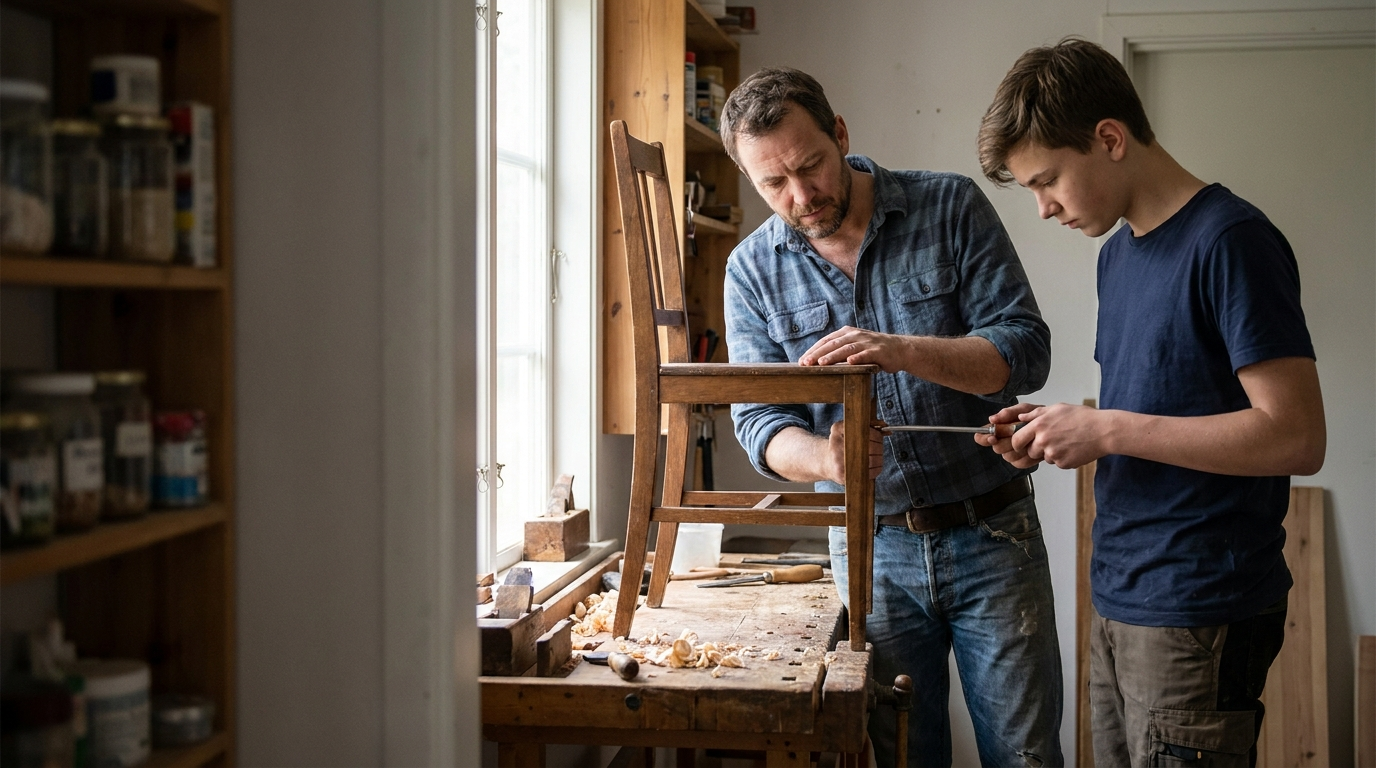
Consider a parent who knows how to repair furniture. On occasional Saturdays, a teenager helps with a suitable project. The parent explains why a joint failed, what materials cost, and how to decide whether a repair is worth doing.
If they eventually sell a restored table, the teenager can help record the expenses and work out what they earned. A practical lesson has become a small experience of production and trade.
No fortune was required. All that happened was this: someone made time to teach.
Your starting point might be different… A relative could teach bookkeeping. A family could agree on how to share the practical work of helping an aging parent. Someone running a small business could explain its accounts to an interested adult child.
Each step gives the household more ability to handle its own affairs. Over time, that can reduce its dependence on government provision and give its members more choices.
There may still be taxes, laws, and services you use, but as your family’s independence grows your household will be able to meet more of its needs through its own work and voluntary cooperation.
A family enterprise can take years to develop. It also needs willing participants. Your children may choose different careers, and the skills you teach should help them make those choices. What those children need to think about is what they will be equipped to do when their turn comes to support a household.
This series will explore how to build earning power, teach responsibility, and prepare for the transfer of family assets. Its aim is a family that creates opportunities for its children and can offer practical support when someone needs help.
One thing you could do this week: Write one sentence about what you want your family to make possible for its descendants.
For example:
“We want our children and grandchildren to learn useful work within the family and have help getting established.”
Discuss it with your spouse or another family member. Then choose one thing you can begin teaching or doing together this month.