

By Matt Morgan, The Daily Bell
Money is the easiest thing a family can lose, and even easier to pass to your children and grandchildren. But the skill that made the money is much harder to hand down, and it is worth far more.
A Japanese temple builder spent fourteen centuries proving it.
In Part One, I asked what your grandchildren will inherit from you besides whatever money remains. This week, the answer comes from the oldest family business on record.
Forty Leaders with One Trade
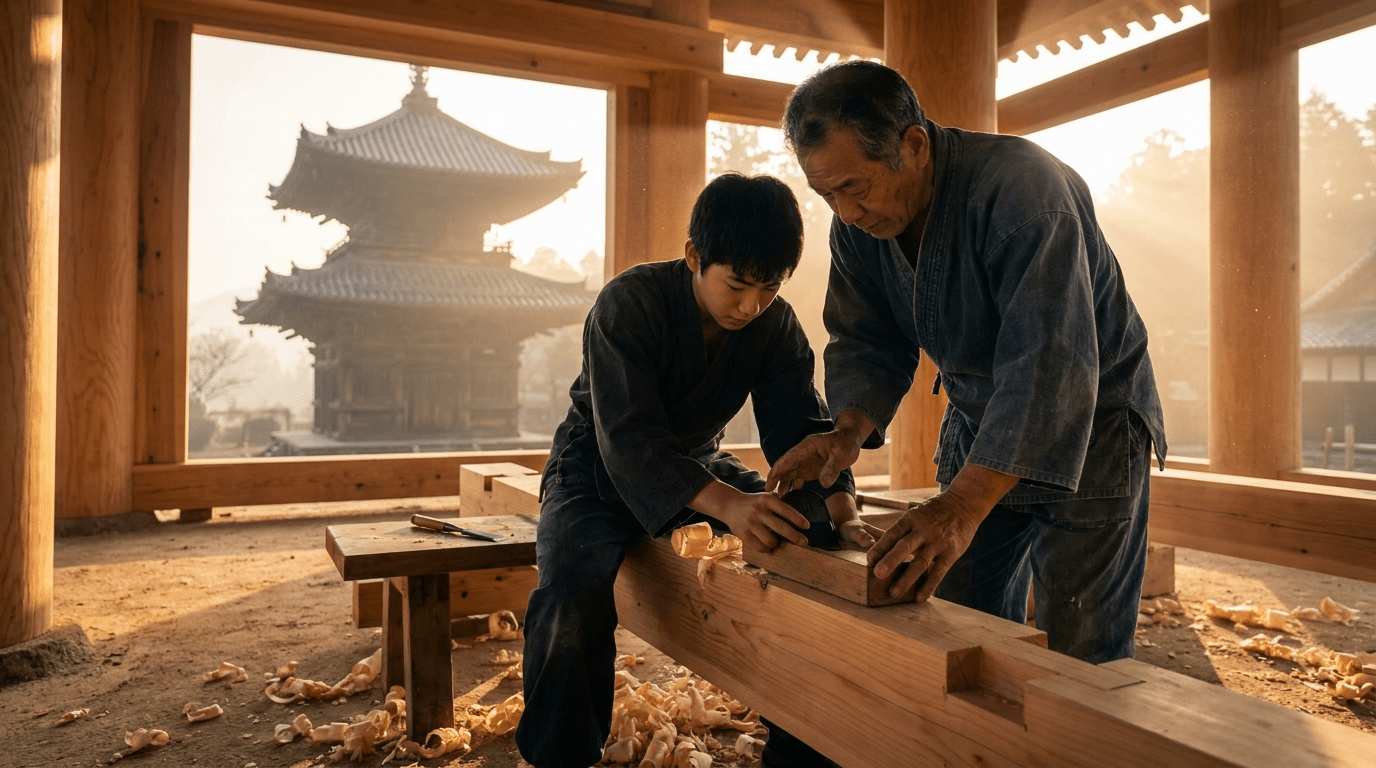
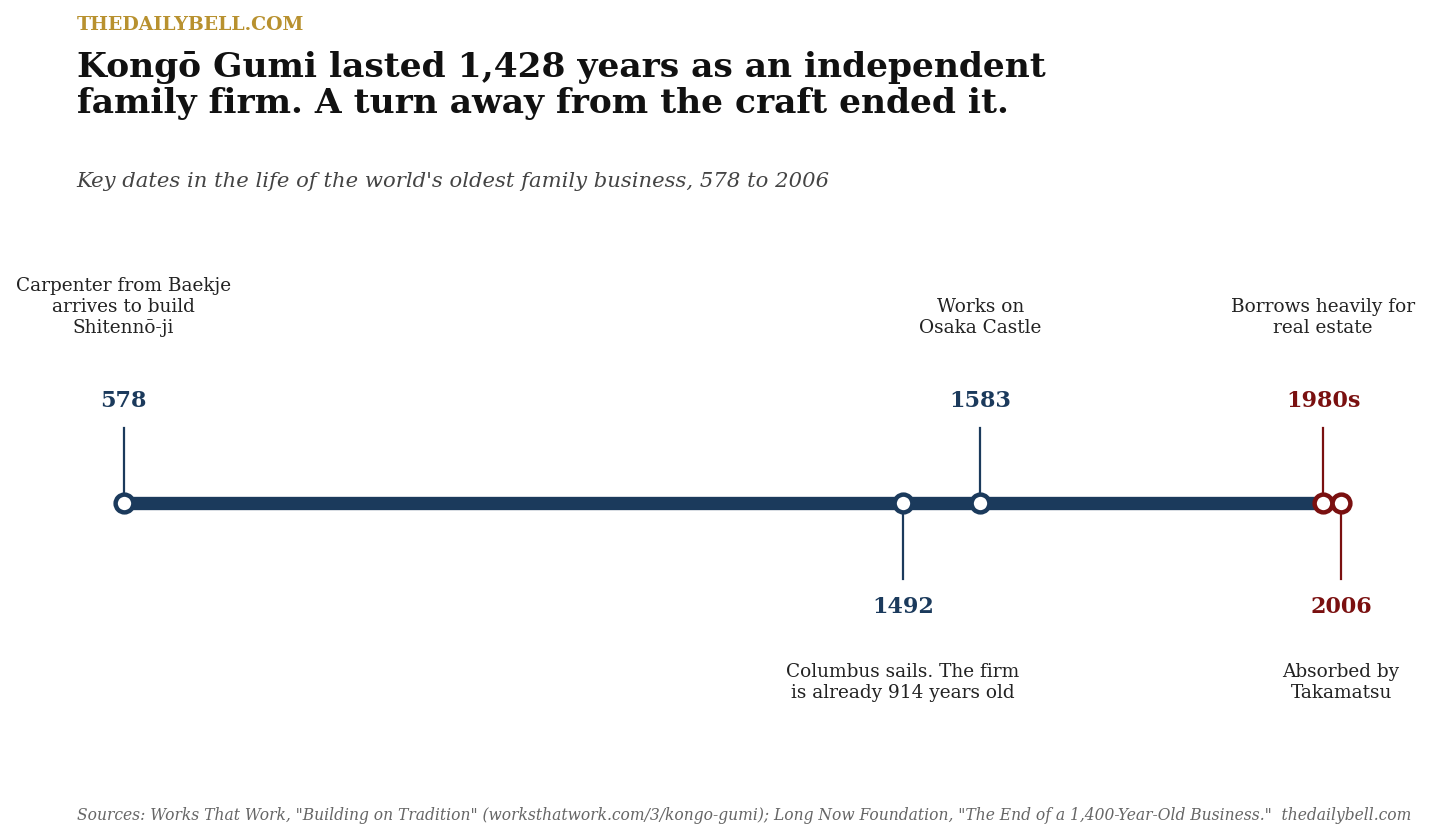
In 578 AD, a Japanese prince brought a carpenter from the Korean kingdom of Baekje to build Shitennō-ji, one of Japan’s first Buddhist temples. The carpenter’s family, the Kongōs, stayed. Their firm, Kongō Gumi, built and repaired temples for the next fourteen centuries and helped build Osaka Castle along the way. So, about forty generations of the family ran it.
Put that in human terms. When Columbus sailed in 1492, the company was already more than 900 years old, and it would keep working for another five centuries after he landed.
The Rule That Kept It Alive
At Kongō Gumi, the company went to whoever could run it. When the sons were not fit to lead, the job went to a brother, or to a son-in-law who married in and took the Kongō name.
In one generation, the leader’s own sons were passed over because they could not handle the trade. In the 1930s, after her husband died, a widow named Yoshie Kongō took charge and carried the firm through the Depression.
Japanese families did this widely. They even adopted grown men as heirs, often a gifted employee who married a daughter. A study of nearly every Japanese company listed on the stock market between 1949 and 1970, followed through 2000, found that firms run by adopted heirs did better than firms run by blood heirs. Both did better than firms with no family in charge. The authors suggest the threat of being replaced pushed blood sons to work harder. (Few things wake up a lazy son like a capable brother-in-law.)
The Two Treasures of Generational Freedom and Wealth
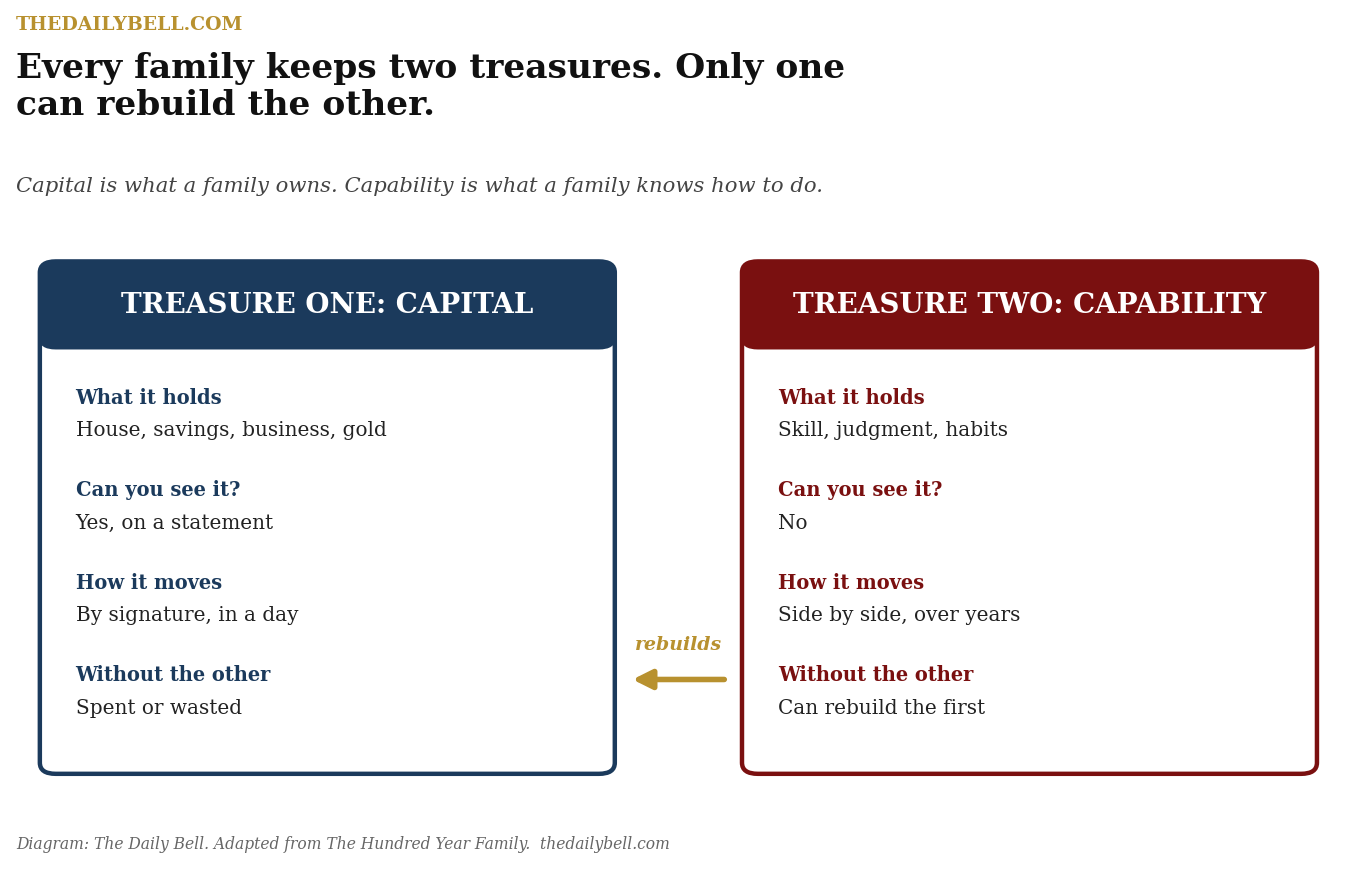
Think of a family’s wealth as two sets of books.
The first treasure is capital: the house, the savings, the business, and the gold. You can see it, and a lawyer can move it with a signature. In the hands of someone who never learned how it was made, it tends to go fast.
The second treasure is capability: this includes skill, judgment and habits that built the capital. It never shows up on a bank statement. It moves from one person to another only by working side by side, over years, and it can rebuild the first treasure if and when it gets wiped out.
Without someone making good decisions about it, he wrote, capital is a heap of capital goods. Left alone, those goods wear out and get spent.
Kongō Gumi protected the second set of books first. It gave the company to whoever had the skill, and let the money follow.
How the World’s Oldest Company Fell
Then a generation broke the rule. During Japan’s property bubble in the 1980s, Kongō Gumi borrowed heavily to invest in real estate. The bubble burst and the land behind those loans lost much of its value. Temple donations fell as Japanese society changed, and from 1998 the demand for Kongō’s work dropped sharply. In 2006, a larger builder, Takamatsu, took over what was left.
The Kongōs were master carpenters and amateur property speculators. Their firm lasted fourteen centuries inside its trade and about twenty years after it wandered outside it.
One more detail matters. Kongō craftsmen still build and repair temples today, working for their new owners, which means the part of the company that couldn’t be borrowed against is the part that survived.
What To Do Next
This week, take a sheet of paper and draw two columns. On the left, list what your family owns. On the right, beside each item, write the name of the person in your family who could run it, or rebuild it, if it vanished tomorrow.
Every blank on the right side is a job for the next ten years.
Kongō Gumi’s money lasted until one generation forgot where it came from – the skill and capability passed from one generation to the next. The results of that skill is still standing in the temples of Osaka today.