

Written by Matt Morgan, Editor at The Daily Bell:
In America, every generation seems to be working for something without thinking beyond the next 25 years. For example, a young couple saves for a down payment while their parents wonder how to afford retirement. Both households are working hard. Yet both feel alone.
Not every American household feels alone though. Many families pass along homes, skills, savings, and reliable help. So why do we so often treat each new households as a separate project, expecting to help them solve the same problems again?
The hundred-year family starts with a different assumption:
One generation’s effort should give the next a foundation.
Research from five communities shows what that can look like for you.
If you’ve spent your life building something, you probably hope your children will take care of it after you’re gone.
But what if they don’t want to? Or they aren’t ready?
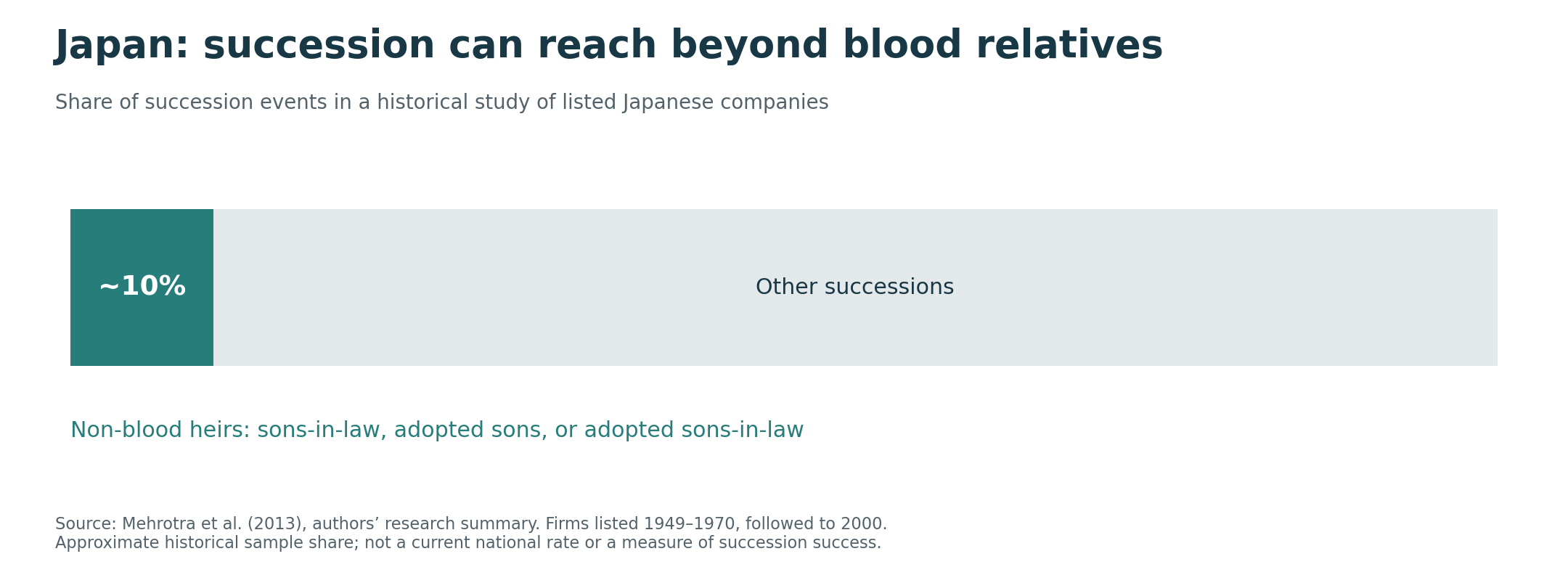
Some Japanese business families have addressed that problem by bringing capable outsiders into the family through adult adoption or marriage.
A study published in 2013 followed Japanese listed companies through 2000. Roughly one in ten succession events involved a son-in-law, adopted son, or adopted son-in-law. The researchers also found a performance advantage among firms run by these non-blood heirs.
That doesn’t mean every Japanese family follows this practice. But it shows how seriously some families take the question of who comes next.
For your family, the lesson might be as simple as teaching your children how to maintain a property, manage savings, or make a difficult financial decision before those responsibilities become theirs.
An inheritance can change hands overnight. Learning how to take care of it takes longer.
Preparing the next generation becomes easier when the current generation sees ownership as a responsibility.
Researchers at Witten/Herdecke University describe this outlook in multigenerational business families as a “trustee mentality.” You own something for a period of time, but you also have a duty to the people who will inherit it.
For some German families, losing ownership made the stakes painfully clear.
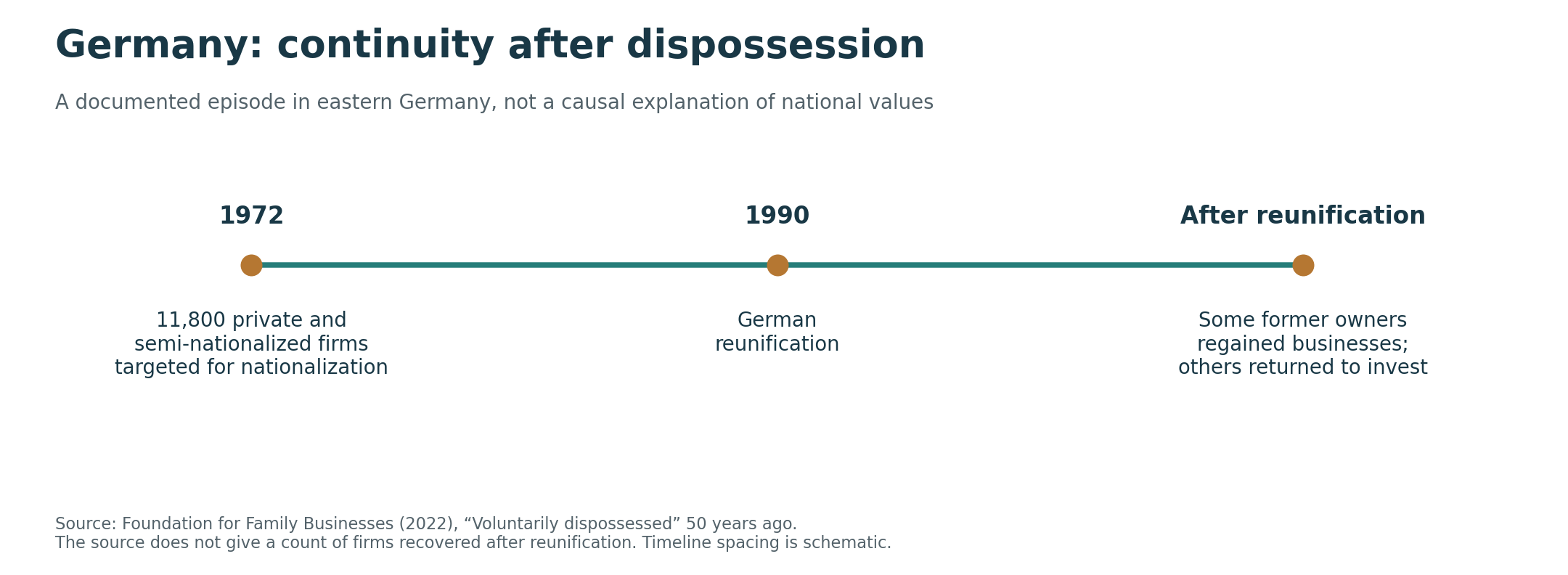
In 1972, East Germany targeted its remaining 11,800 private and semi-nationalized businesses for nationalization. After reunification, some dispossessed families regained their businesses. Others who had moved west returned to invest.
Those families’ decisions to return and rebuild show us that the connection still mattered even after years of separation.
A home or business can hold decades of work, relationships, and knowledge. When a family recognizes that, the conversation about ownership starts to include what would be lost if those connections disappeared.
Of course, keeping something in the family doesn’t mean much if family members can’t count on one another.
Research using urban Chinese household data offers an example of how that support can work.
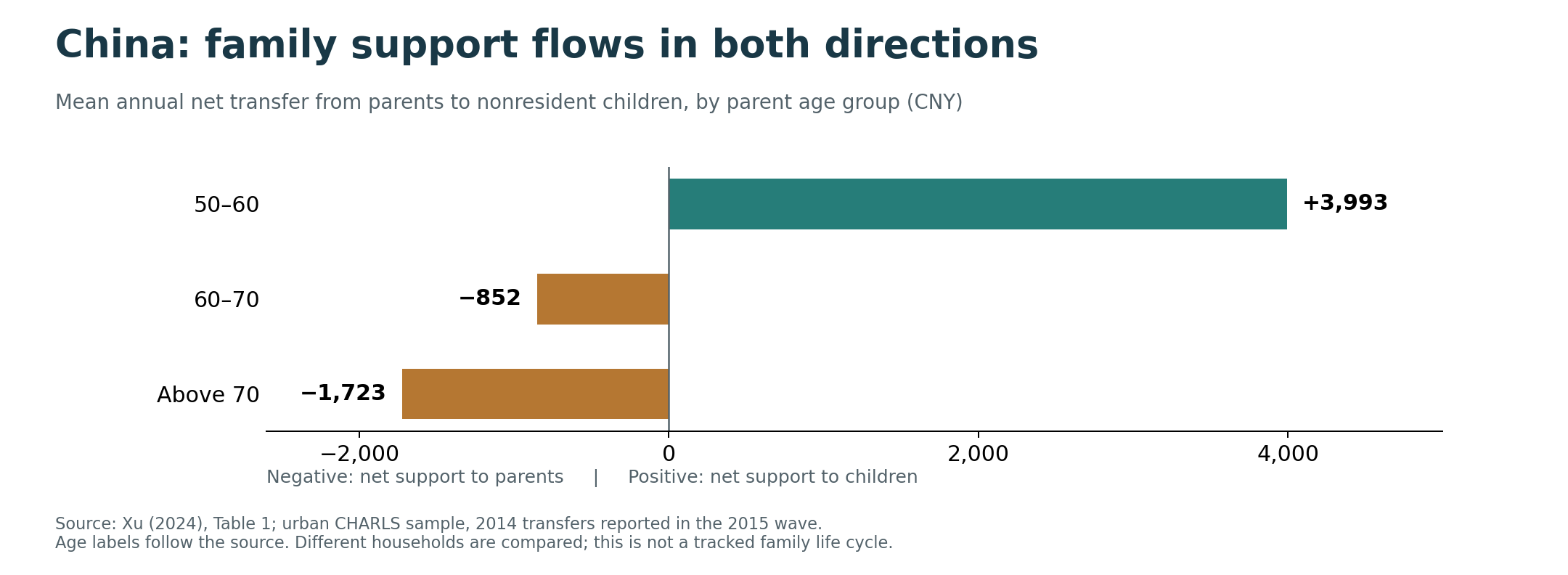
Among parents aged 50–60, more money and other assistance went to children living outside the home than came back on average. Among older parents, the balance ran the other way: they received more than they gave.
The study compares different households, so it doesn’t follow the same parents from helping their children to receiving help later. Still, it shows a family network in which assistance travels both ways.
Parents help their children get established. Adult children can help their parents as they grow older.
That gives a family a different starting point for planning. Instead of asking only, “Will I have enough for myself?” members can also ask, “What can we reasonably do for one another?”
The answer will depend on their circumstances, but having the conversation gives them a chance to find out that includes.
Housing is one place where that conversation can make an immediate difference.
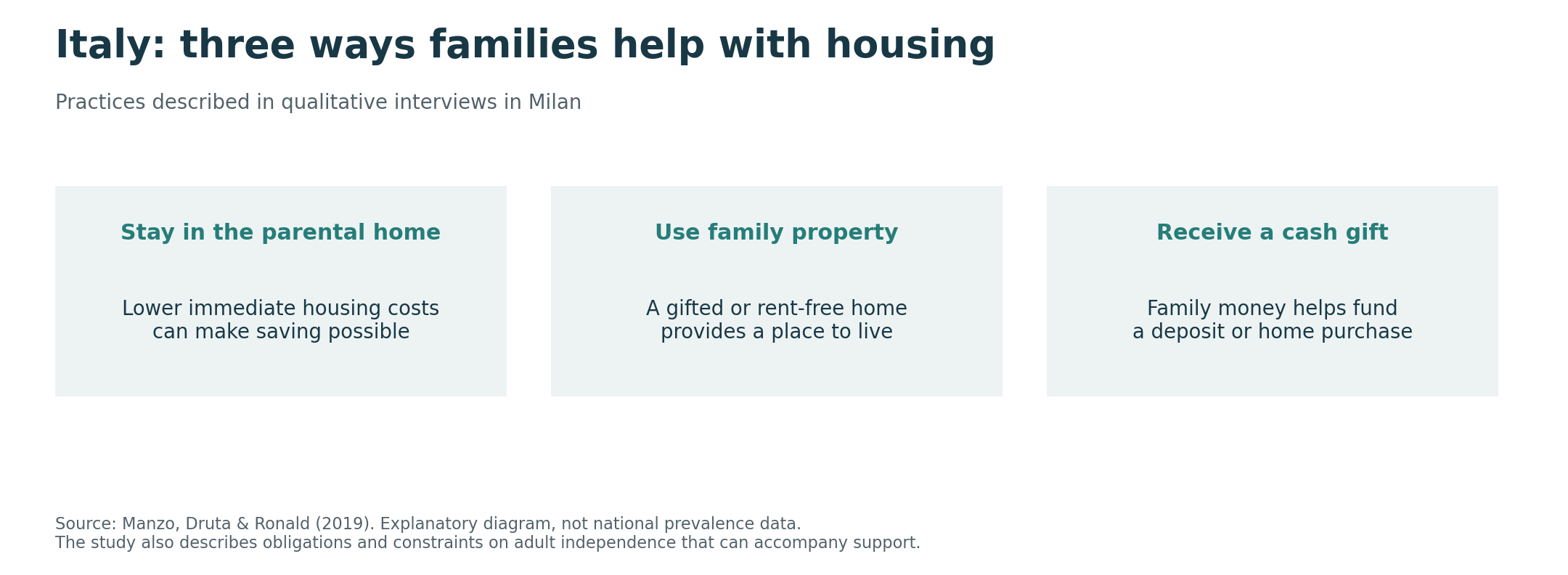
Interviews with families in Milan, published in a 2019 study, describe several ways relatives helped younger adults establish a home. Some stayed with their parents while saving. Others received property, lived rent-free, or got money toward a purchase.
Each arrangement used resources the family already had to make the next step more manageable.
But the interviews also revealed tensions. Help sometimes came with expectations about where adult children would live or how they would make decisions.
You can probably imagine how that works out. Parents see themselves making a sacrifice. Their children appreciate the help but worry that every choice now requires approval.
That’s why the terms matter. Before offering a home, a loan, or a gift, talk about what each person expects.
Family support works better when everyone understands where the assistance ends and the recipient’s independence begins.
There’s an American example of this kind of preparation, too.
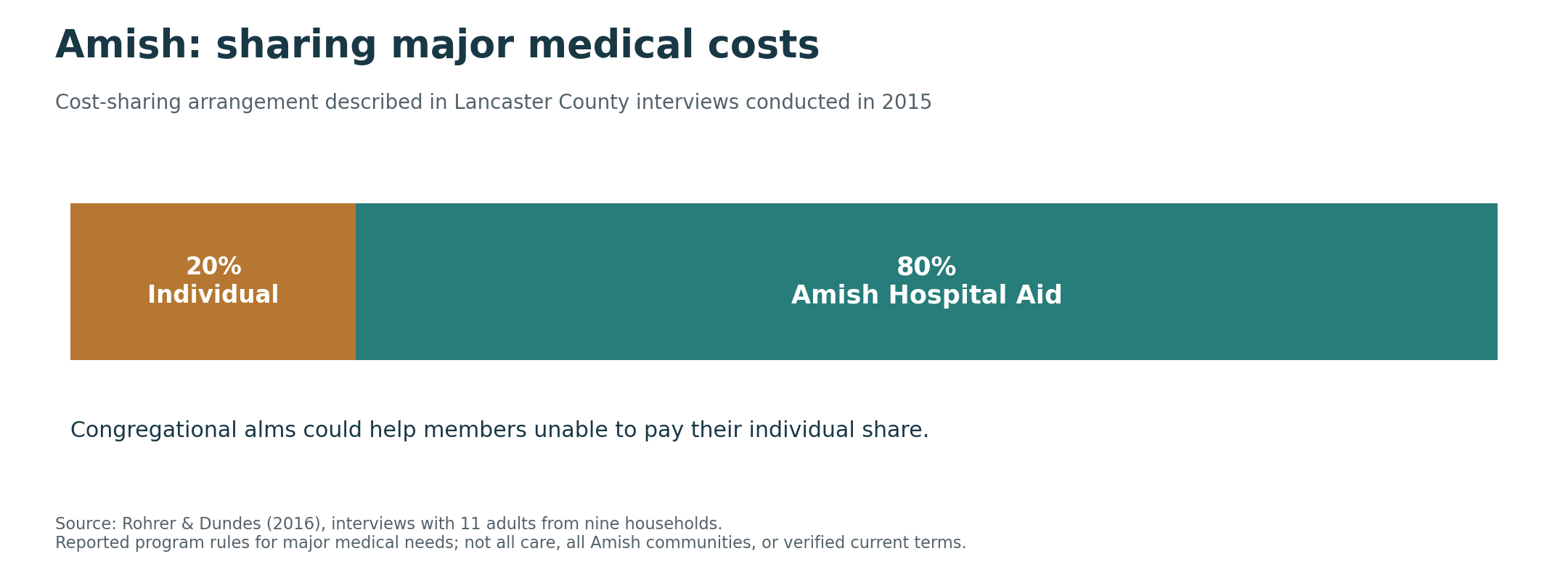
A 2016 study interviewed 11 Amish adults from nine households in Lancaster County about how they handled major medical expenses. Participants described support through congregational giving and Amish Hospital Aid.
Under the arrangement they described, the individual was expected to pay 20 percent of a covered bill, while Hospital Aid covered 80 percent. Congregational funds could help someone who couldn’t afford their share.
This was a small study of a particular community, and coverage had limits. It wasn’t a promise that every expense would be paid.
For our purposes, what matters, is that a system existed before a particular household needed it. People had ways to collect contributions, review needs, and arrange assistance.
Your family may never organize anything that extensive. But you can decide who would help an aging parent, how you might respond to a job loss, or whether to set aside money for emergencies.
Those decisions are easier to discuss before everyone is under pressure.
If families can plan this way, why does it often feel so difficult?
Part of the answer is that the financial environment can work against patient saving.
Under a fiat-money system, currency isn’t redeemable for a fixed amount of gold or another commodity. Its supply can expand, and monetary policy affects the conditions in which families save, borrow, and plan.
When prices rise faster than the interest on your savings, the money you kept now buys less.
For parents and children, inflation erodes a parents’ purchasing power while reducing the mortgage debt’s value in today’s dollars. Whether the children find the mortgage payments easier depends on what happens to their income and other expenses.
So, it doesn’t make sense to save. And if holding cash means falling behind, people have a reason to spend sooner or pursue assets they expect to rise in price. The pressure makes patient stewardship harder to practice.
After all, every community we’ve discussed operates within a fiat-money economy. They also face different housing markets, public policies, and financial pressures.
Their examples show that families (and yours) still have choices about how they respond.
Those choices begin with what a family teaches and rewards.
Children notice what adults admire. They hear the excitement about a new purchase. They also notice whether anyone takes the time to repair something, teach a skill, or help a relative through a difficult month.
Over time, those experiences give them an idea of what money is for and what family members owe one another.
You can make those lessons more deliberate.
Let your children help maintain something they may one day inherit. Explain why you saved for a purchase instead of borrowing. Talk honestly about what help you can afford to offer and what responsibilities come with accepting it.
Then choose one commitment your family can sustain over the next year. Perhaps it’s a modest emergency reserve, regular help for an older relative, or time spent teaching a practical skill.
Follow through long enough for it to become something people can count on.
Your grandchildren will have their own decisions to make even though hey may live somewhere else and choose work you never imagined.
But they can still benefit from what you learned, preserved, and passed along. They should be free to build a life of their own with a foundation beneath them.