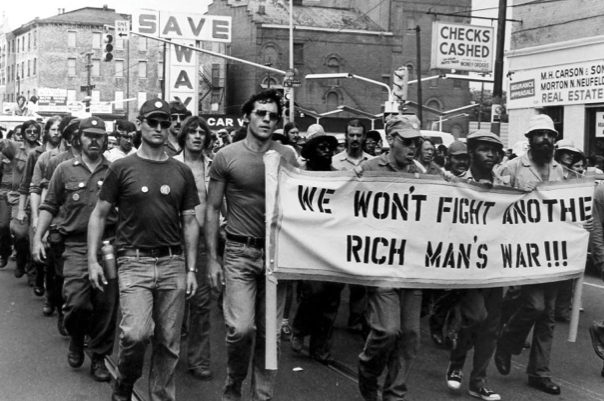


The U.S. State Department has released a major report detailing the Cuban communist regime’s 67-year campaign of subversion against the United States. The report outlines how Havana has employed espionage, ideological influence, support for radical movements, and proxy networks from the earliest days of the Castro era through to the present. It further shows how Cuba adapted Soviet-era subversion tactics into the modern era by deepening alliances with powers such as China, Russia, Venezuela, and Iran, using the island as a strategic platform for intelligence activities and regional influence operations against U.S. interests.
For nearly seven decades, the Cuban government has conducted a sustained campaign of espionage, ideological influence, and proxy support aimed at weakening the United States from within, according to a detailed report examining Havana’s operations.
The campaign, the report argues, has never relied on conventional military power. Instead, Cuba perfected an irregular model built on intelligence penetration, the training and arming of left-wing militants, the cultivation of American activists and intellectuals, and the creation of enduring front organizations. The island became both a safe haven for fugitive American radicals and a forward operating base for hostile foreign powers.
From the earliest days after Fidel Castro seized power in 1959, Cuban leaders viewed the destruction of “Yankee imperialism” as central to the regime’s survival and identity. Castro’s own 1958 letter to an aide declared that after the Cuban war ended, a “much wider and bigger war” against the United States would begin. That war, the report contends, has continued ever since.
Cuba helped shape a distinctive form of revolutionary leftism centered on Third Worldism rather than classical Soviet class struggle. The 1966 Tricontinental Conference in Havana brought together hundreds of delegates from Africa, Asia, the Middle East, and Latin America under an anti-imperialist banner that identified Western civilization itself as the primary enemy. American Black radicals, student militants, and anti-war activists were encouraged to see themselves as an internal colony linked to global liberation struggles.
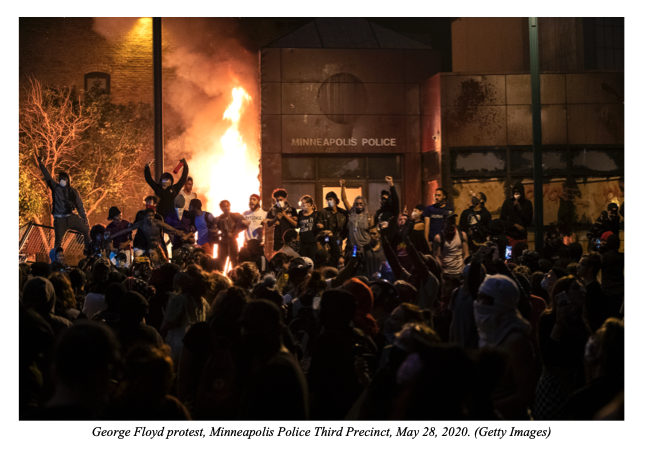
This ideology influenced groups ranging from the Black Panthers and Weather Underground to later movements. Delegations of American radicals traveled to Cuba through programs such as the Venceremos Brigade, founded in 1969. Over the decades the Brigade has brought roughly 10,000 Americans to the island for “political education.” U.S. intelligence assessments and defector testimony have described the program as heavily staffed by Cuban intelligence officers who used it to identify and recruit sympathetic students and activists.
Cuban support extended to direct assistance for domestic terrorism. Puerto Rican groups such as the FALN and Macheteros received training, weapons, and operational guidance linked to Cuban intelligence. Black Liberation Army members and Weather Underground figures found refuge in Cuba after bombings, robberies, and murders. By the late 1990s, the FBI estimated dozens of American felony fugitives were living under Cuban protection.
Cuban intelligence, long known as the DGI and later the DI, has ranked among the most effective human-intelligence services targeting the United States. Former CIA counterintelligence chief James Olson has described it as more formidable in certain respects than the KGB because of its cultural
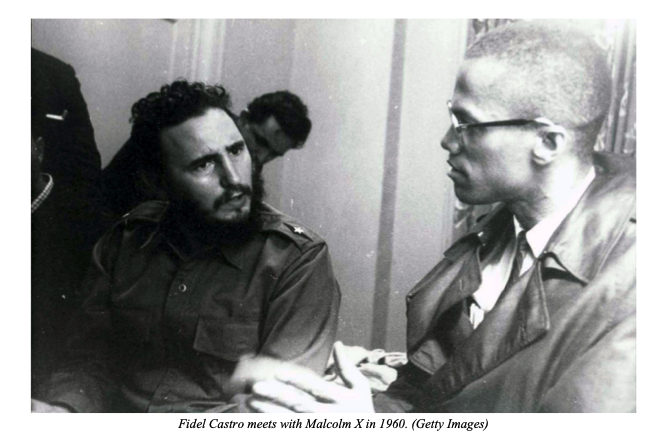
fluency and focus on ideological recruits rather than paid assets.
High-profile cases illustrate the depth of penetration. Ana Belén Montes rose to become the Defense Intelligence Agency’s top Cuba analyst while secretly working for Havana from 1984 until her arrest in 2001. She compromised U.S. intelligence operations, revealed the identities of undercover officers, and is believed to have contributed to the deaths of American personnel in Latin America. Victor Manuel Rocha, a former U.S. ambassador and National Security Council official, pleaded guilty in 2024 to having spied for Cuba for roughly 40 years. The Wasp Network, dismantled in 1998, infiltrated Cuban exile groups in Florida and gathered information on U.S. military facilities; one of its leaders was later convicted of conspiracy in the 1996 shoot-down of civilian aircraft that killed four people.
The report traces how these efforts evolved into a dense web of U.S.-based organizations that continue to operate today. The Cuban Institute of Friendship with the Peoples (ICAP) serves as a central hub coordinating “solidarity” delegations, academic exchanges, and political lobbying. Its current president is a former member of the Wasp Network. Partner groups such as the National Network on Cuba, the National Lawyers Guild, Code Pink, the People’s Forum, and chapters of the Democratic Socialists of America maintain regular contact with Cuban officials, organize travel to the island, and campaign against the U.S. embargo.
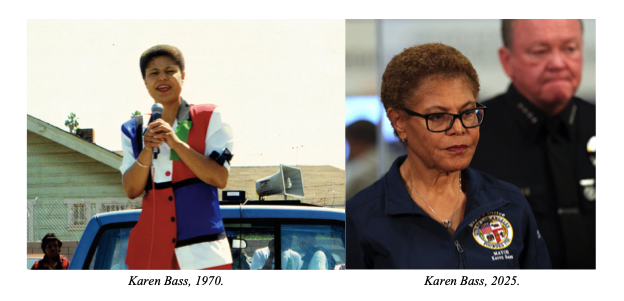
Los Angeles Mayor Karen Bass identified in the State Department report as a communist activist.
These networks have intersected with broader left-wing activism, including anti-ICE protests and campus mobilizations. Cuban officials have publicly celebrated figures such as Assata Shakur, the Black Liberation Army member who lived in Cuba for decades after her conviction for the murder of a New Jersey state trooper.
After the Soviet collapse, Cuba adapted by deepening partnerships with Russia, China, and Iran. The island hosts signals-intelligence facilities used by both Moscow and Beijing. Chinese and Russian personnel at these sites have reportedly increased in recent years. Iran has expanded commercial, technical, and political ties, while Cuban networks have facilitated contacts between Latin American leftist movements and Middle Eastern militant groups.
The report concludes that Cuba’s material weakness has never been the measure of its danger. Its power has always been ideological, subversive, and network capable of outlasting the Soviet empire that once subsidized it and of grafting itself onto successive generations of American radicals and new anti-American powers. From its position 90 miles from Florida, the regime continues to function as both an intelligence platform and a connective tissue for a wider coalition hostile to U.S. interests.
While ordinary Cubans face chronic shortages and repression, the apparatus dedicated to influence operations, recruitment, and intelligence collection remains intact. The campaign Castro promised in 1958, the report argues, is still underway.
Full Cuba State Department Report on Cuba https://www.state.gov/wp-content/uploads/2026/07/Cuba-Report.pdf